🇬🇧The Tomb at Paradiso (near Vaiano) was discovered in January 1908 when farmers working for Sig. Carlo Cozzi were clearing land for a new vineyard. The discovery was reported immediately and published in the Notizie degli Scavi di Antichità by E. Galli. After a long period of neglect, the tomb was restored in the 1970s. More recently, through the cooperation of the Comune di Castiglione del Lago and Associazione Archeo Trasimeno, under the authorization of the Soprintendenza Archeologia Belle Arti e Paesaggio dell’Umbria, the tomb has been cleaned, consolidated, and reopened to the public. // 🇮🇹La Tomba di Paradiso (Vaiano) è stata scoperta a gennaio 1908 quando contadini al servizio di sig. Carlo Cozzi stavano lavorando per la realizzazione di una vigna. La scoperta fu data subito communicazione da E. Galli nelle Notizie degli Scavi di Antichità. Dopo un lungo periodo di abbandono la tomba è stata restaurata negli anni ’70. Più recente, grazie ad un accordo tra il Comune di Castiglione del Lago e L’Associazione Archeo Trasimeno, sotto l’autorizzata della Soprintendenza Archeologia Belle Arti e Paesaggio dell’Umbria, la tomba è stata pulita e sistemata e riaperta al pubblico.
🇬🇧Take Virtual Tour of the Tomb/🇮🇹Fai un Tour Virtuale della Tomba:
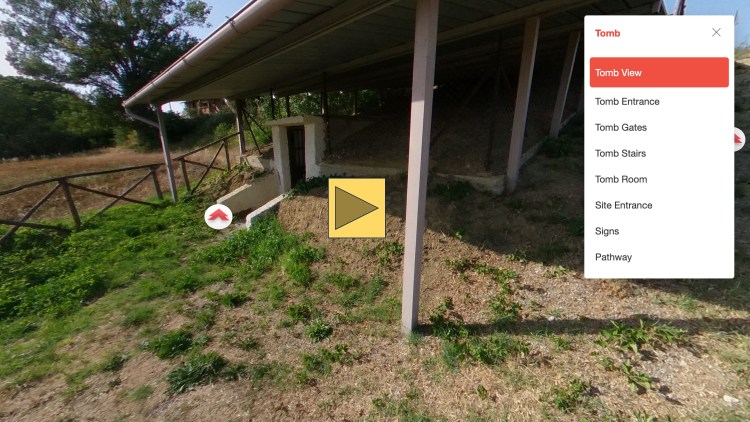
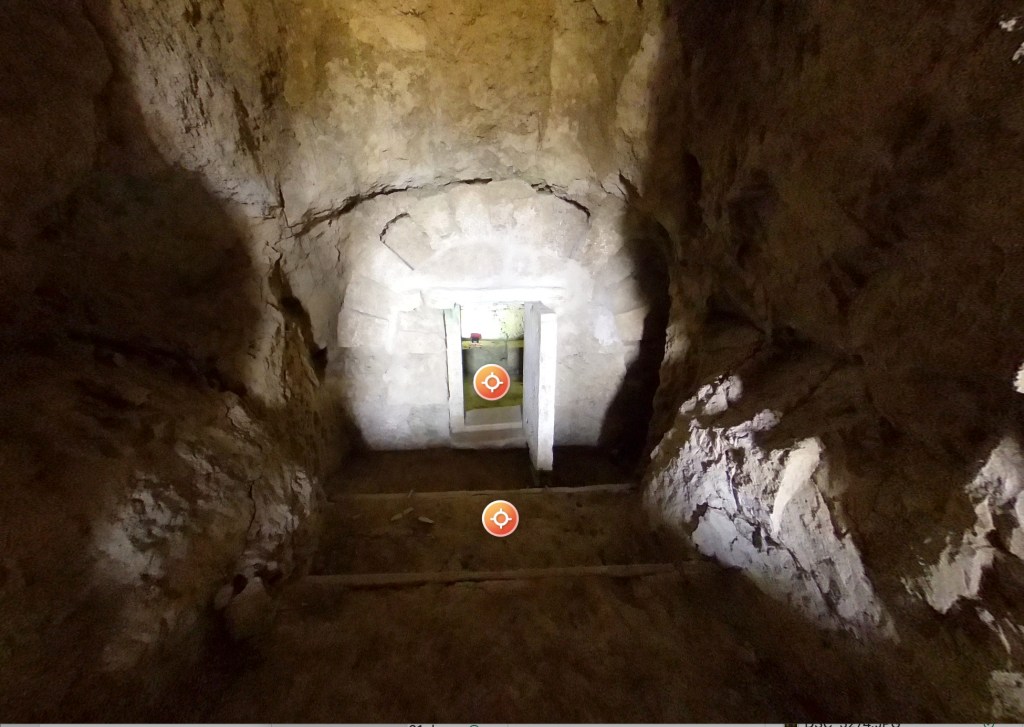
🇬🇧The tomb can be dated to the 2nd century B.C. based on its architectural characteristics and the objects it contained. Originally, the tomb had a long dromos that was cut into the natural slope of the hill. Today only the part of the dromos immediately in front of the burial chamber remains. The door of the burial chamber is constructed of a single block of travertine that was hinged into the architrave and threshold in such a way that it is possible to easily open and close the tomb. The walls of the tomb chamber itself measure two meters by two meters and were constructed in rows of precisely cut and dressed ashlar blocks from which springs the barrel vault of the ceiling. Against the back wall is a bench formed by travertine blocks on which the cinerary urns were placed. //🇮🇹 La tomba è cronologicamente collocabile nell’ambito del II sec. a.C. In origine, la tomba aveva un lungo dromos scavato nel bacino naturale. Oggi si conserva solo il tratto terminale precedente la camera funeraria. La porta della camera è costituita da un’unica anta realizzata in travertino, incardinata nell’architrave e nella soglia in modo da poter garantire facilmente la chiusura e l’apertura della tomba. Le pareti della camera funeraria misurano due metri a due metri e sono state construite da filari di blocchi di travertino accuratamente squadrati e rifiniti, sui quali poggia la volta a botte. Alla parate in fondo è addossata una banchina costituita da blocchi in travertino sulla quale erano appoggiate le urne cinerarie.
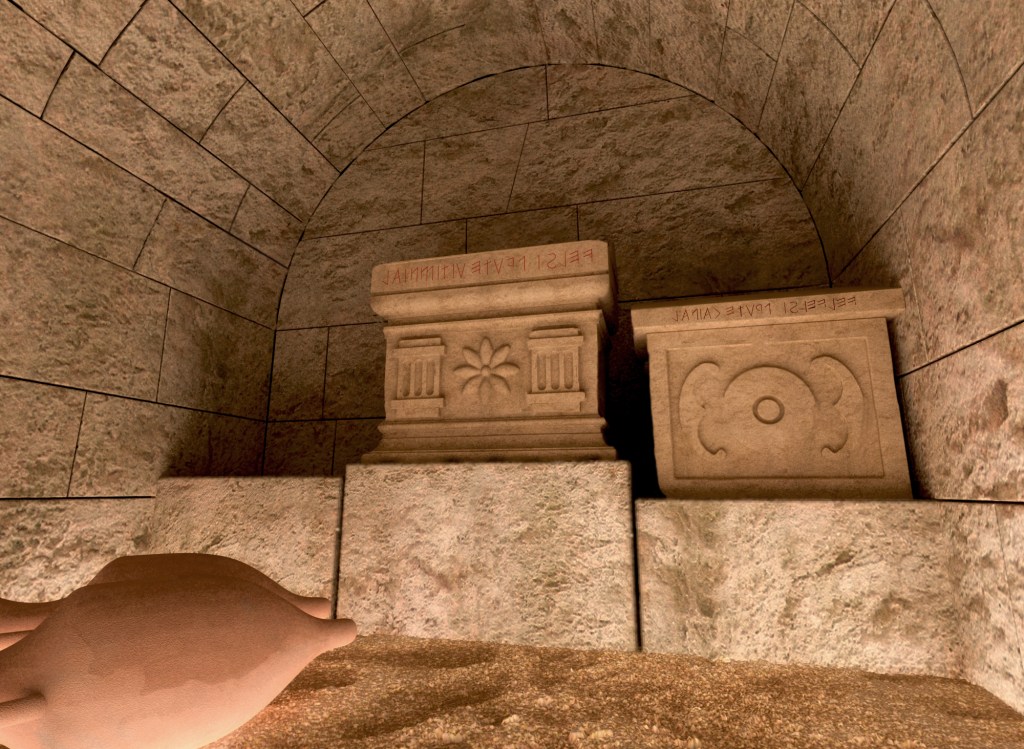
🇬🇧During the period of the tomb’s construction, the territory of Chiusi, which included the area around Vaiano, experienced a radical social evolution. There was a shift towards small agrarian estates controlled by a few gentes (clans) that sought to distinguish themselves from the majority of the population. One of those clans was the Prute who appear to have been the owners of the Paradiso Tomb. The lids of the two cinerary urns found in the tomb chamber each have inscriptions on their lids that were carved into the stone and originally painted red. One reads, velsi : prute : ultimnial, and the other, vel : velsi : … : prute : cainal. These refer to members of the Velsi Prute family, which, according to recent interpretations was a branch of the Velsi, one of the dominant families in Chiusi. // 🇮🇹Durante il periodo della costruizione della tomba il territorio di Chiusi, incluso della zona di Vaiano, si stava registrando una radicale evoluzione nella società. Ci fu un cambiamento verso piccole proprietà agrarie controllate da pochi gentes che cercavano di distinguersi dalla maggioranza della popolazione. Uno di quei gentes era quello dei Prute che sembrano essere stati i proprietari della tomba. I coperchi delle urne cinerarie scoperte nella tomba hanno inscrizioni incise e orginariamente rubricate. Una dice, velsi : prute : ultimnial, e l’altra, vel : velsi : … : prute : cainal. Queste fanno riferimento a membri dei Velsi Prute, secondo le più recenti interpretazioni, ramo di quella famiglia facente parte della classe dominante chiusina dei Velsi.
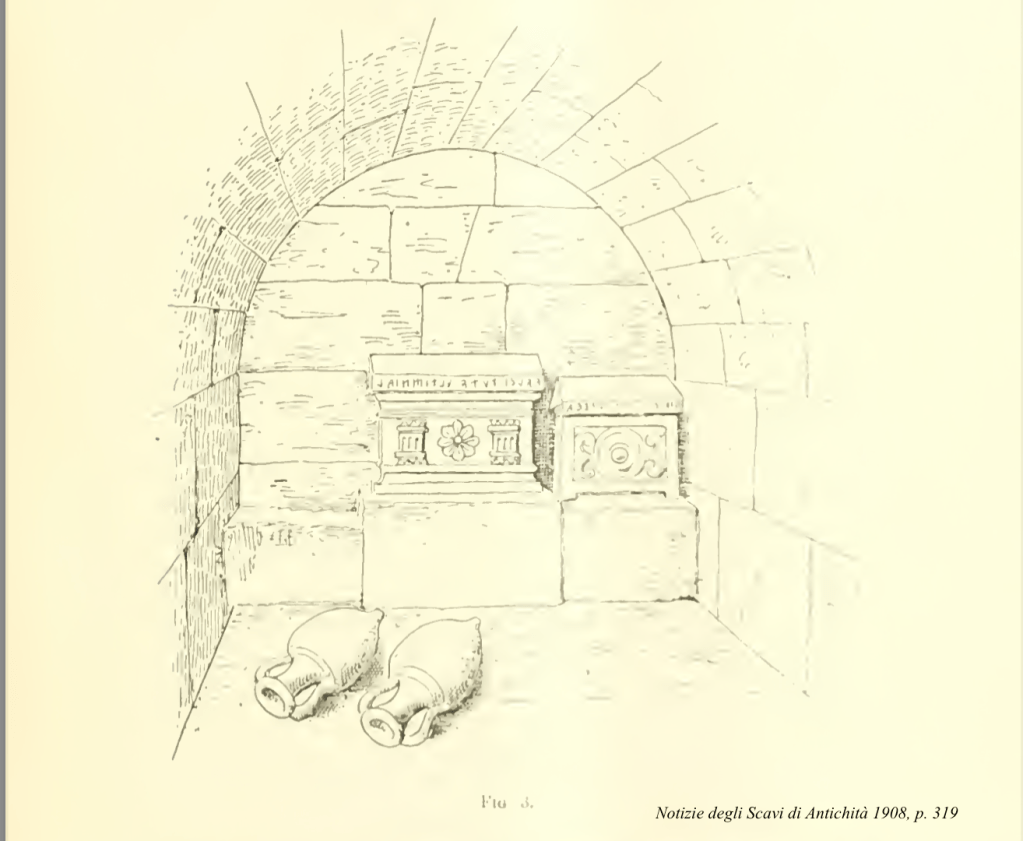
🇬🇧The chests of the two urns are decorated in relief. The first has a rosette between two triglyghs and the other a patera (offering plate) between two pelte (Thracian-style shields). In addition to the cinerary urns, two amphora were discovered on the floor of the tomb chamber. In the area around Chiusi, the placement of amphora in tombs was a common practice during the Hellenistic period. These vessels are representative of agraian activity, the basis of the family’s wealth, and their deposition in the tomb indicates a surplus in production that would have given the family an economic advantage. Another intrepretation is that the amphora, which may have contained wine, inidcate that members of the Prute gens were adherents of the cult of Dionysus. // 🇮🇹Le casse delle due urne erano decorate a rilievo. La prima ha una rosetta fra due triglifi e l’altra una patera (un piatto per offerente) tra due pelte (scudi di tipo tracia). Oltre alle urne cinerarie due anfore sono state rinvenute nel pavimento della camera. Nella zona di Chiusi la deposizione di anfore in tombe era una practica frequente durante l’età ellenistica. Questi contenitori sono rappresentatitivi dell’attività agraria—base della ricchezza della famiglia—e la loro deposizione nella tomba indica un surplus di produzione che avrebbe dato un vantaggio economico alla famiglia. Un’altra interpretazione è che le anfore, che forse contenevano vino, indicavano che i membri della gens Prute sono stati aderenti a culti dionisiaci.
 Trasimeno Archaeology Digital Museum