Excavations at Località Ranciano took place in 2022. Located a few kilometers to the southwest of Castiglione del Lago, the site was long known to local residents from surface finds and the discovery of a bronze statuette of Eros holding a sword (see fig. 1), now in the collections of the new archaeological museum in Castiglione del Lago (opening soon). Prior to the 2022 excavations, a magnetometry survey revealed the presence of four anomalies that appeared to be kilns (Fig. 2).

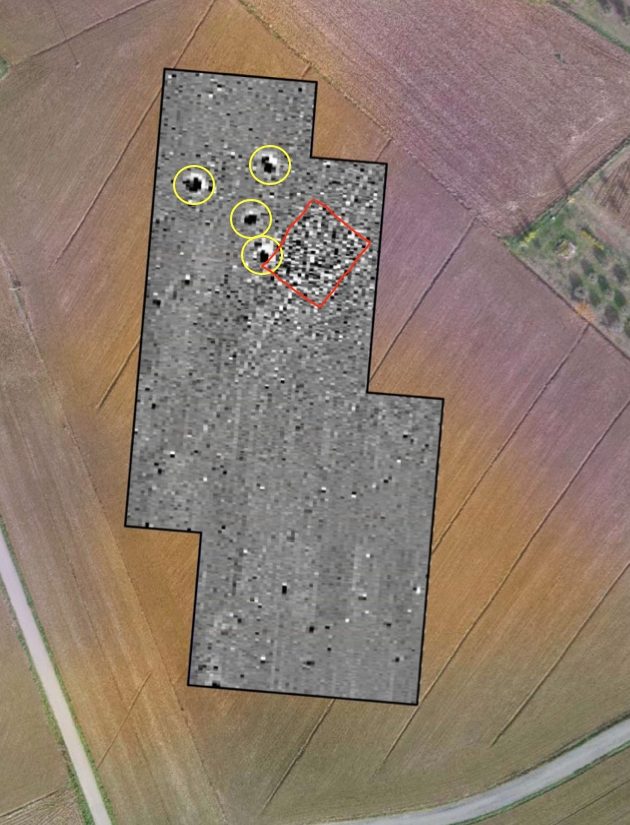
Excavation was conducted in two areas of the site, Alpha and Delta, with the intent of uncovering at least two of the kilns. Area Alpha, on the west side of the site, revealed a Medieval lime kiln that was mostly likely created soon after A.D. 1252 when Perugia decided to reclaim this area and sent people to settle in Ranciano. At that time, remains of the Roman site must have been visible and abundant enough to warrant burning the stone, and possibly marble, for use as quicklime in the construction of the Medieval village.
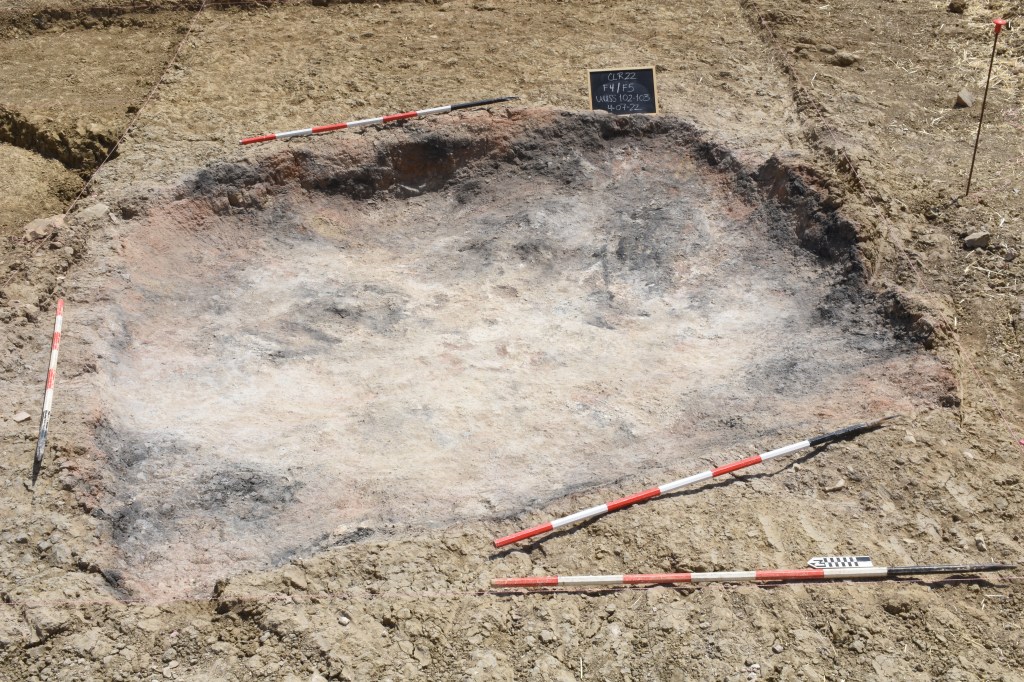
The kiln was formed by digging a pit into the natural clay and lined with wood beams, the carbonized remnants of which are still visible around the edges. The pit was then filled with stone and capped with a clay “roof.” The wood was then set on fire and the whole thing would have been allowed to burn until most of the stone had become lime. Many small, irregular pieces of limestone were recovered from the bottom of the pit. The kiln would have only been used once.
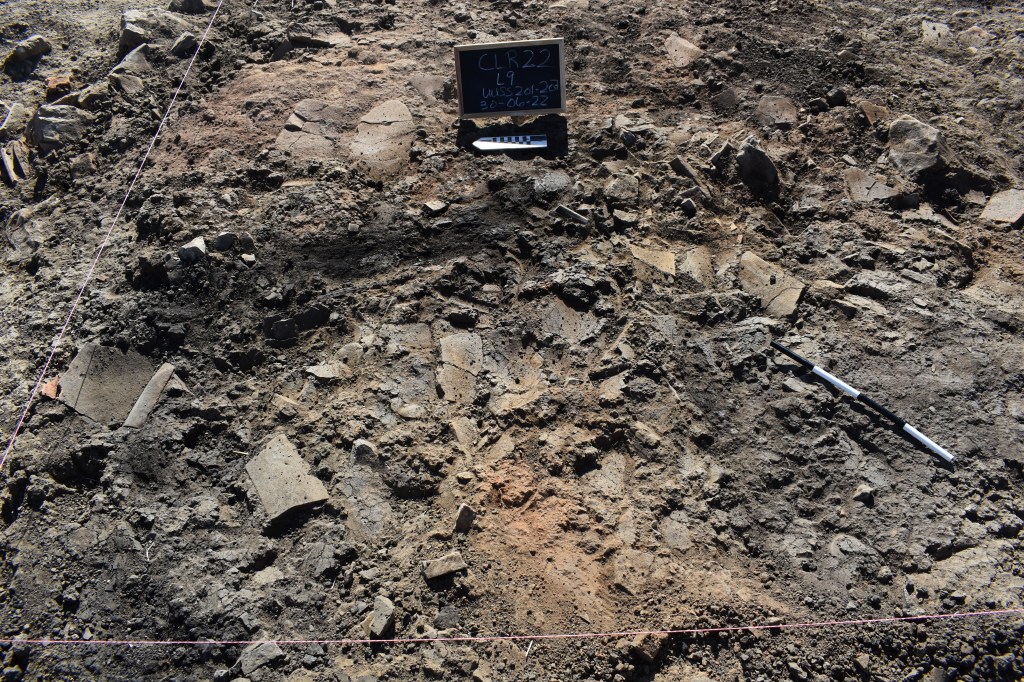
The second excavation area, Delta, was opened to the southeast where the magnetometry survey showed a possible kiln adjacent to another anomaly that looked like a possible workshop. During excavation evidence of intense burning was uncovered in an area that, based on the pottery and tile recovered as well as a collection of late Roman bronze coins, suggested a domestic space, possibly a kitchen (Figs 4 and 5).

Ceramic materials from the excavations indicate that the site was occupied from the late Republican into the Imperial Roman period. One of the most interesting finds from the site is a carnelian gemstone carved with the image of goatherd and beveled so that it could be set into a ring.

Unfortunately, the excavations at Ranciano had to be cut short when the team discovered the tail fin of a WWII mortar shell. The Battle of Ranciano, which occurred on 24 June 1944, is part of the history of the site. For more on that please see the page on that battle.
 Trasimeno Archaeology Digital Museum